WORK 01 Production platform · original frontend · 2016–2017
EazeGames - Original Web Platform
I designed the frontend architecture and implemented the original web application for a real-time skill-gaming platform with multiplayer competitions, payments, role-based access, a webshop, and multilingual UX.
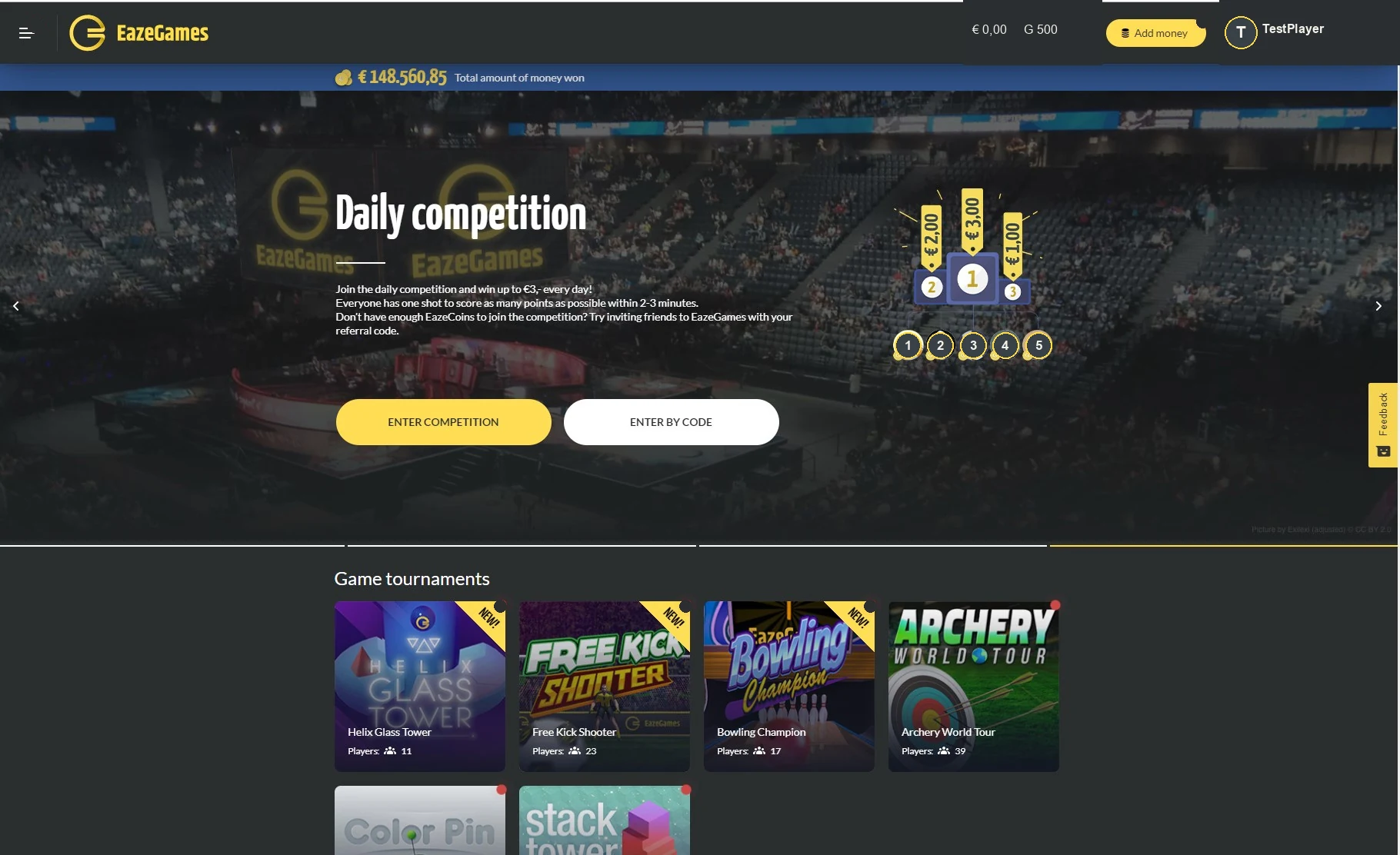
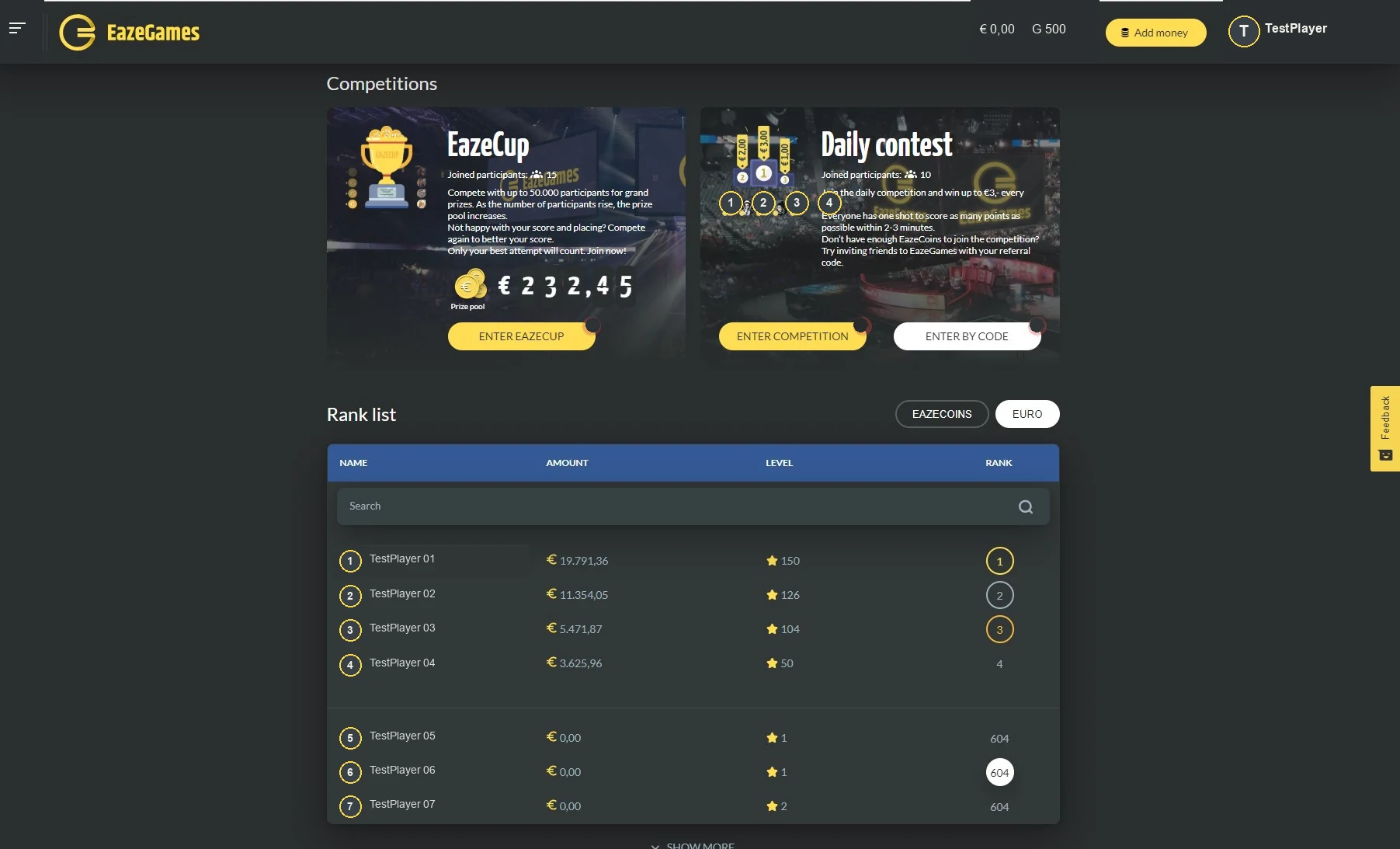
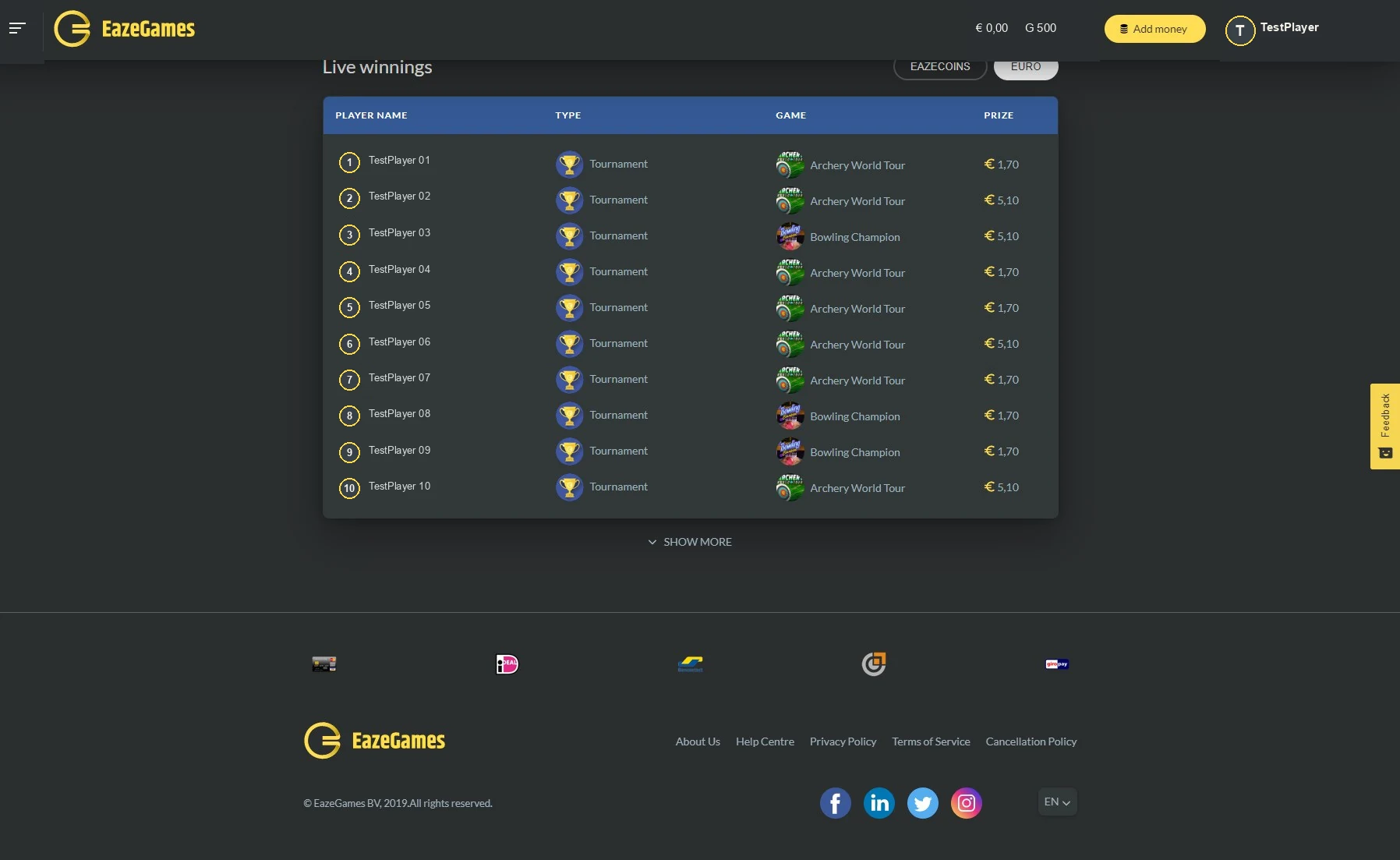
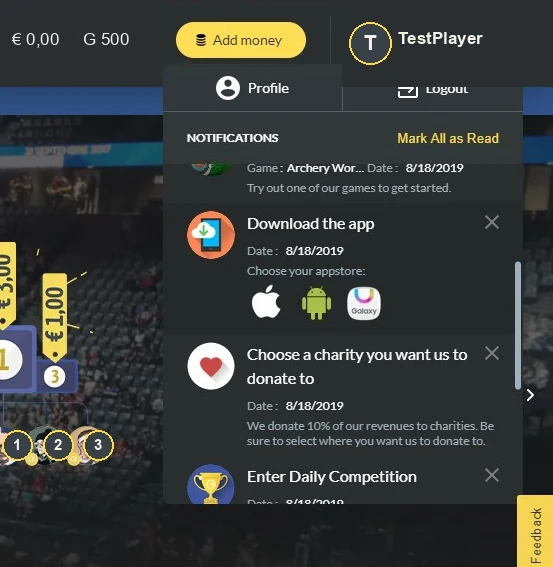
The screenshots below show the Version 1 frontend from my 2016–2017 engagement.
Engagement facts
- Role
- Senior Frontend Developer
- Employer
- SharpMinds
- Client
- EazeGames
- Engagement
- 2016–2017
- Scope
- Original web frontend
- Starting team
- Two people
- Expanded team
- Six frontend contributors after the prototype phase
- Delivery
- Original frontend launched during the engagement
PROOF Original engagement
What I delivered.
- 01Frontend created from scratch
- 02Real-time WebSocket product flows
- 03Shared component and utility library
- 04Production delivery from a two-person frontend starting team
- 05Frontend CI, candidate interviews, and junior mentoring
01 Product context
Competitions, balances, payments, and live account state.
EazeGames combined HTML5 skill games with player-versus-player competitions, practice and money balances, rankings, payments, account verification, and multilingual user journeys. Live events changed competition progress, balances, and rankings, so those states had to stay clear throughout the interface.
02 Original Version 1 evidence
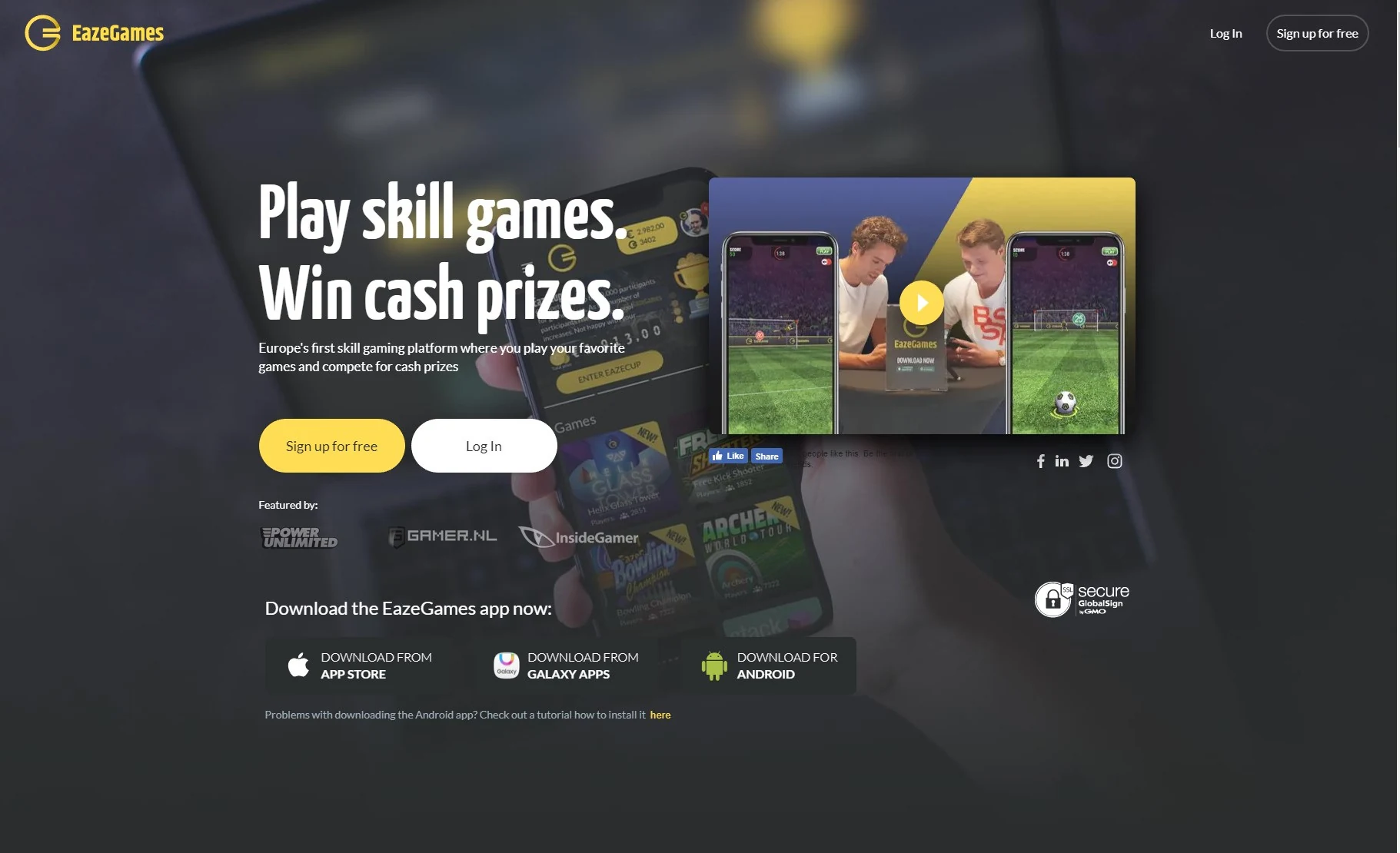
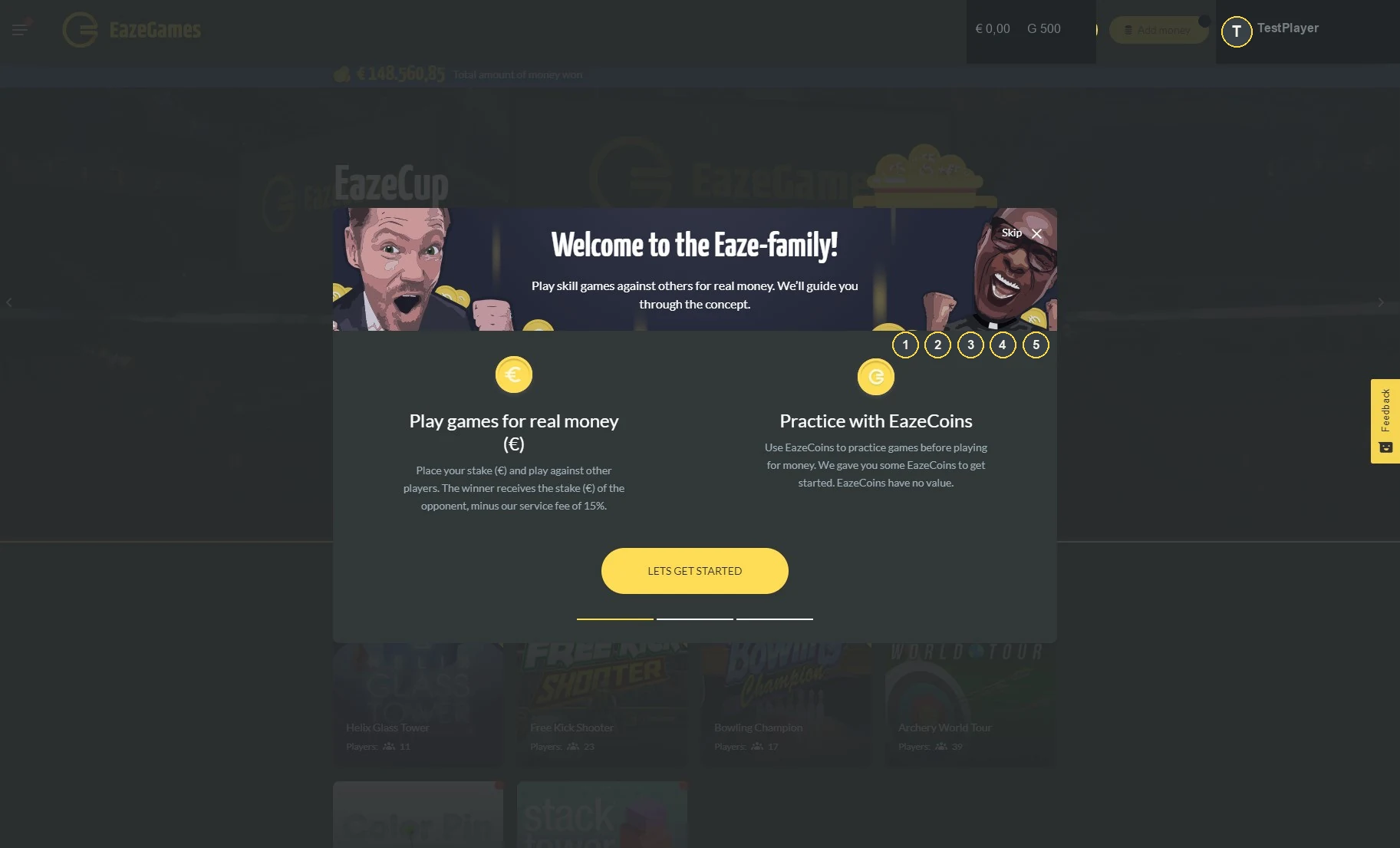
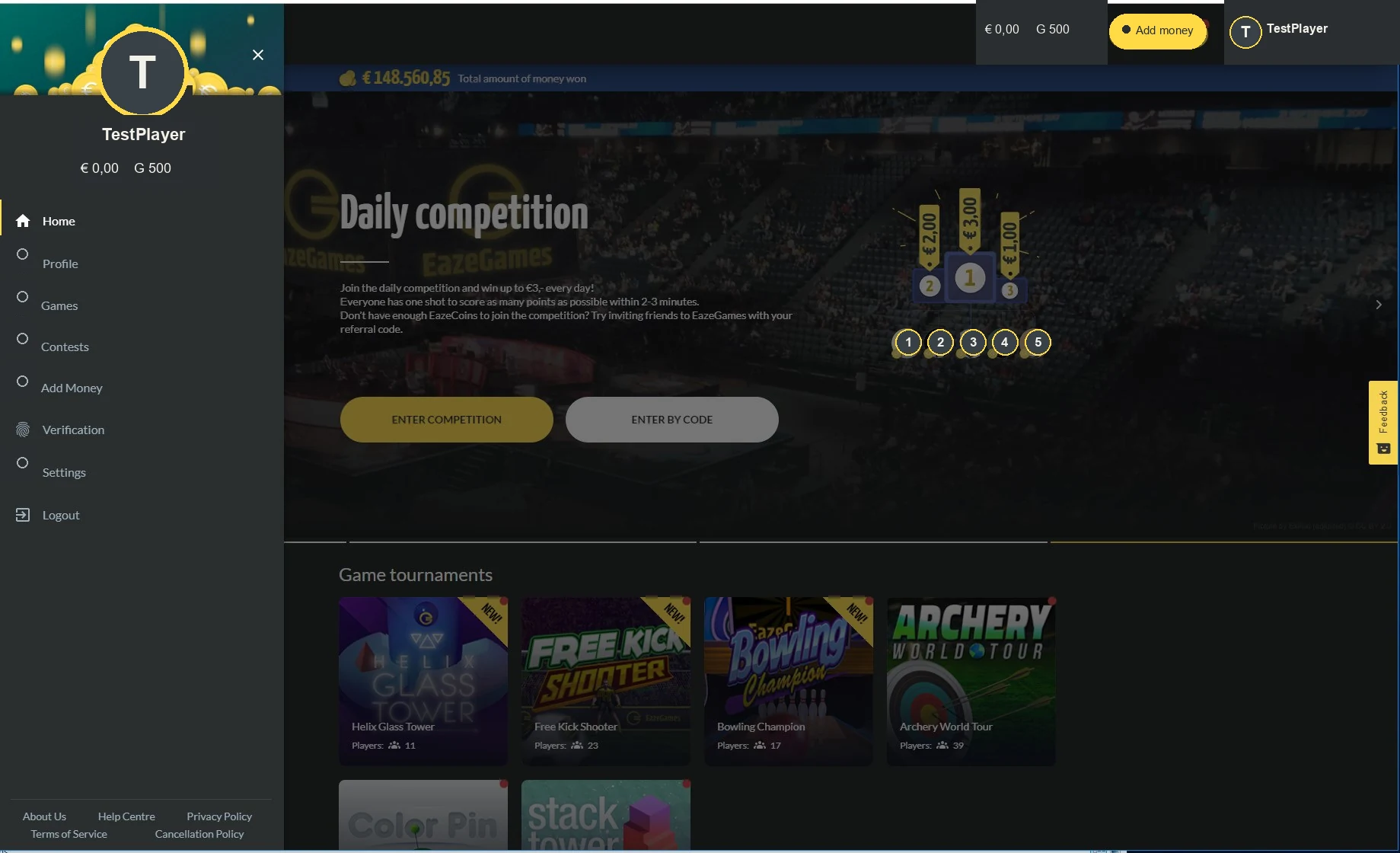
Six views of the implemented product.
These Version 1 screenshots use sanitized test identities. Signup and email-confirmation screens are omitted.
03 Architecture & ownership
My frontend scope.
I joined the initial two-person team and worked on the frontend from an empty repository through production. I also created the shared component and utility library used as the frontend team grew to six.
Frontend architecture and delivery
- Frontend architecture and application structure
- Core React and Redux implementation
- Shared UI component and utility library
- WebSocket updates for competitions, rankings, and account state
- HTML5 game integration inside the product shell
- Payment, role-based, webshop, onboarding, and localized UI flows
- Frontend CI and delivery workflow
- Client meetings, estimation, code review, candidate interviews, and junior mentoring
Connected systems
- Backend and WebSocket services
- HTML5 game providers
- Pay.nl payment services
- Compliance and regulatory workflows
Text equivalent: the React and Redux browser application contained the shared UI, account and role screens, competition and game catalog, WebSocket-driven updates, wallet and payment UI, internationalization, and frontend delivery setup. It integrated with backend APIs, WebSocket services, game providers, and Pay.nl.
04 Original user journey
From the landing page to a live competition.
- 01Public landing
- 02Sign up or log in
- 03Account validation and age consent
- 04Practice currency or money-play onboarding
- 05Competition and game discovery
- 06Enter a competition or join by code
- 07Play an integrated HTML5 game
- 08Live result, rank, and winnings state
- 09Wallet, verification, profile, settings, and notifications
05 Real-time product complexity
Keeping live competition state understandable.
- WebSocket updates changed player activity, rankings, balances, and competition progress.
- Money and practice currency, user roles, and account status each changed what the interface displayed and allowed.
- Integrated HTML5 games and interrupted connections needed clear loading, error, and recovery states inside the same product flow.
06 Reusable foundation
A shared component and utility library.
I created the shared library as the product expanded. It gave the growing frontend team one place for reusable components, utilities, and interaction conventions.
07 Delivery & team growth
The frontend team grew from two to six.
I joined a two-person frontend team. After the prototype phase, the client expanded it to six contributors. I set up frontend CI, joined client planning and estimation, reviewed code, interviewed candidates, and mentored junior developers through production delivery.
08 Delivery record
What shipped during the engagement.
ProductionOriginal frontend launched during the engagement
2 → 6Frontend team expanded after the prototype phase
Version 1Shared components and utilities for the growing frontend
Frontend CIAutomated frontend delivery workflow
09 Historical retrospective
What I learned about live state and bundling.
WebSocket events changed competition progress, rankings, wallet balances, and account state as players used the platform. Redux gave those updates a predictable data flow. I kept game, competition, wallet, and account state in separate parts of the store so the team could add features within clear areas of the application.
Webpack bundled modules, split code into smaller chunks, processed images and other assets, and minified production JavaScript and CSS. Code splitting reduced the initial download, while the asset pipeline kept the growing frontend practical to load and ship.
What I would change today
- Typed contracts for WebSocket and API events
- State machines for competition, wallet, and verification flows
- Integration tests and monitoring around WebSocket and Pay.nl failures